
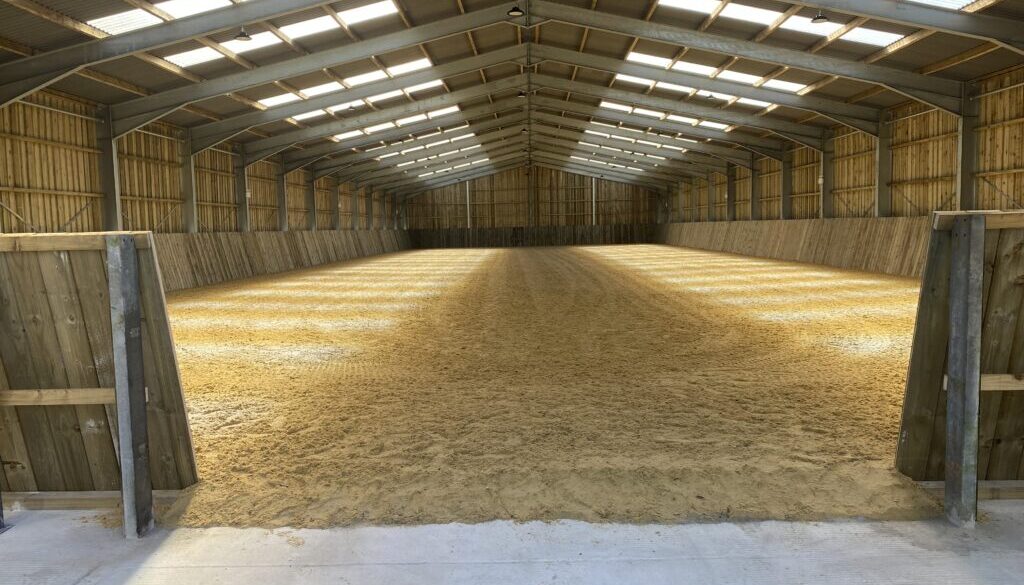
Constructing an indoor riding arena involves a systematic and thoughtful process to create a controlled environment that accommodates equestrian activities throughout the year. Here’s an overview of the key steps involved in building an indoor riding arena:
- Site Selection and Preparation: Choose an appropriate location with sufficient space and accessibility. The ground should be leveled, and proper drainage considerations should be made to prevent water accumulation. The site should also allow for future expansion if needed.
- Design and Layout: Work with architects and engineers to design the arena layout, considering factors such as the size of the arena, the number of riders it will accommodate, and the inclusion of additional features like viewing areas, stables, and storage rooms. Ensure the design complies with local building codes and regulations.
- Foundation and Footing: Construct a solid foundation to support the structure, and carefully choose the footing material. Common options include sand, rubber, or a mix designed for optimal traction, shock absorption, and dust control. The footing is critical for the safety and performance of both riders and horses.
- Building Structure: Choose the appropriate building materials and construction methods for the indoor arena. Steel or wood frame structures are common choices. Consider factors like insulation and ventilation to maintain a comfortable environment, and install ample lighting for visibility during darker hours.
- Ventilation and Climate Control: Adequate ventilation is crucial to prevent condensation and maintain air quality. Consider installing fans, vents, and windows for proper airflow. If your region experiences extreme weather conditions, you may also need to incorporate heating or cooling systems to keep the temperature within a comfortable range.
- Fencing and Safety Features: Install durable and safe fencing around the perimeter of the arena. Consider adding kick walls to protect both riders and horses. Ensure that all safety features, such as emergency exits, are incorporated according to regulations.
- Amenities and Infrastructure: Plan for additional amenities like viewing areas, restrooms, stables, and storage spaces for equipment. Adequate parking facilities for trailers and vehicles should also be considered.
- Maintenance and Management: Implement a routine maintenance plan, which may include grooming the footing, inspecting the structure, and addressing any issues promptly. Regular upkeep ensures the longevity and functionality of the indoor riding arena.
Building an indoor riding arena requires collaboration between architects, engineers, and equestrian experts to create a facility that meets the needs of riders and horses while adhering to safety standards and regulations.


